Advanced Lubricant Manufacturing
Established 2015
Technical & Industrial Solutions
The moment of greatest wear risk for most engines isn't sustained highway driving — it's the first few seconds after a cold start, when oil hasn't yet circulated fully and engine components briefly run with minimal lubrication.
A lower-viscosity cold-flow characteristic allows oil to reach critical components faster during this vulnerable window, which is particularly relevant in regions with cooler winter mornings or vehicles that see frequent short trips and repeated cold starts.
Our automobile-grade oils are formulated with cold-flow performance as a specific design consideration, not just an incidental property of the base viscosity grade.

Minimal lube = max wear
Faster circulation in cold

More contamination risk
Keeps contaminants suspended
Urban stop-and-go driving is one of the more demanding conditions an engine oil actually faces, even though it doesn't look demanding from the driver's seat.
Frequent idling and low-speed operation mean the engine spends more time in the temperature range where moisture and unburned fuel can contaminate the oil, and repeated short trips often don't give the engine enough sustained runtime to boil off that contamination.
Our automobile-grade oils are formulated with detergency and dispersancy characteristics suited to this driving pattern, helping keep contaminants suspended and away from critical engine surfaces even under stop-and-go conditions that are harder on oil than steady highway driving.
At the other end of the driving spectrum, sustained highway speeds, hot climates, and load conditions like towing or carrying heavy cargo push engine oil toward higher sustained temperatures.
Oxidation resistance and viscosity stability under this kind of thermal load are what keep an automobile-grade oil performing consistently whether a vehicle spends most of its time in city traffic or covers long highway distances.
We formulate across our automobile-grade oil range to hold up under both ends of this spectrum rather than optimizing narrowly for one driving pattern.
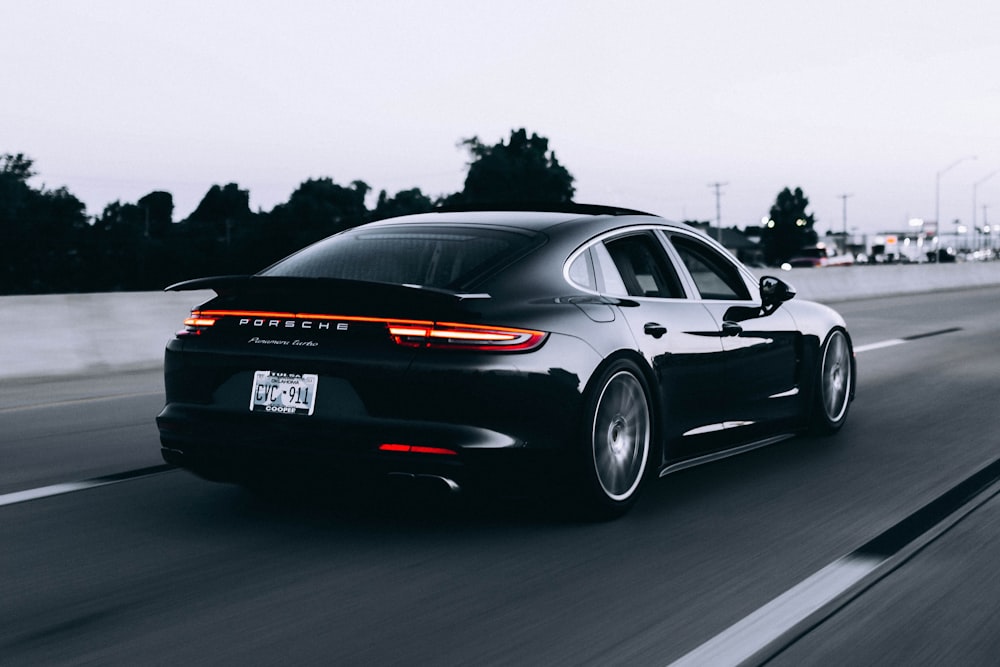
Sustained high temp
Both ends covered
Automotive engine technology has evolved considerably — turbocharging, direct injection, and variable valve timing are now common even in mainstream passenger vehicles, and each places additional demands on engine oil.
Our automobile-grade oils are formulated with these modern engine technologies in mind, rather than relying on formulations designed around older, simpler engine architectures.
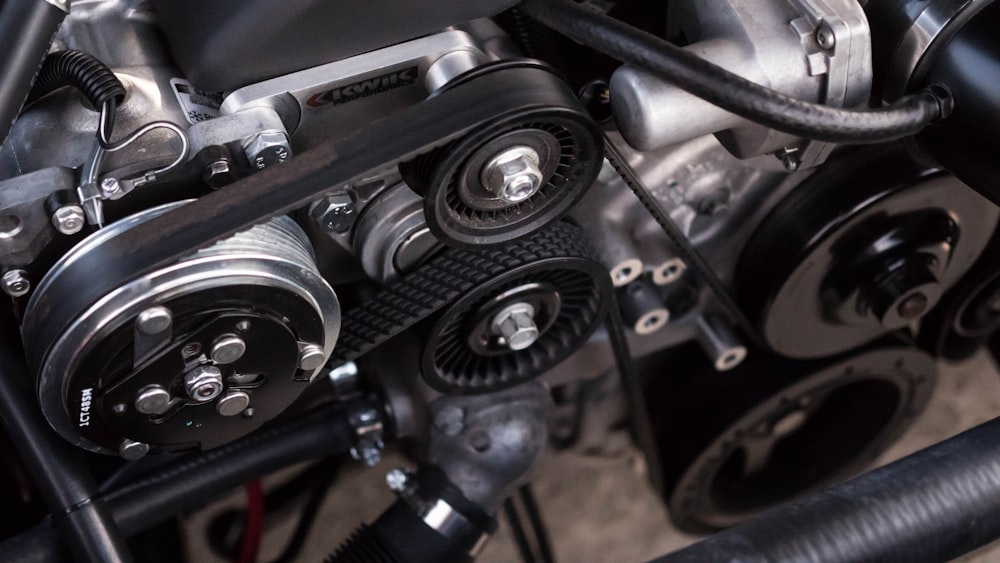
Oil runs through turbo bearing at extremely high temperatures and speeds — needs thermal stability
Can increase fuel dilution and soot loading in oil — needs detergency
VVT depends on consistent oil flow and cleanliness to function correctly

Modern vehicles increasingly rely on emissions control components — catalytic converters, particulate filters, and related systems — that can be damaged by certain oil additive chemistries, particularly excess ash content from some traditional additive packages.
We formulate our automobile-grade oils with emissions system compatibility as a standing consideration, supporting the long-term function of these components rather than treating them as a separate concern from engine lubrication.

Ambient temperature range plays a larger role in oil selection than many vehicle owners realize. A viscosity grade well-suited to a hot, dry climate can behave quite differently in a region with cold winters, where oil needs to flow readily at startup temperatures well below what a warmer-climate formulation was optimized for.
Multi-grade oils are formulated to perform across a temperature range, but the specific range they're built for still varies by product, and matching that range to actual regional climate conditions — not just the vehicle manufacturer's generic recommendation — can meaningfully affect both cold-start protection and high-temperature film strength.
Longer oil change intervals have become common as formulations have improved, but an extended interval is only appropriate when the oil's actual condition supports it — driving pattern, oil quality, and engine condition all affect how much service life a given oil genuinely has left.
We formulate our automobile-grade oils to support extended intervals where driving conditions allow, while being direct about the fact that severe conditions — extensive short-trip driving, extreme heat, heavy towing — typically warrant shorter intervals regardless of what a general guideline suggests.
Matching interval to actual usage, rather than a flat calendar assumption, is part of getting the most reliable protection out of any oil.
Driving pattern matters
Shorter interval needed
Petro-SYN automobile-grade oils serve passenger cars, SUVs, and light commercial vehicles across both petrol and diesel platforms, covering the range of driving conditions from daily urban commuting to sustained highway and load-carrying use.
Whether you're maintaining a single family vehicle or managing a light commercial fleet, our automobile-grade oil range is formulated to match the way vehicles are actually driven.
The right automobile-grade oil depends on more than just the vehicle manufacturer's minimum specification — driving pattern, climate, vehicle age, and engine technology all factor into which grade and formulation will actually perform best over an extended service interval.
Our team can help work through those specifics rather than defaulting to a generic recommendation that doesn't account for how a vehicle is actually used.
For guidance on the right automobile-grade oil for your vehicle and driving conditions, reach out through our Contact page.
CONTACT US →
Established 2015. We manufacture advanced transmission, industrial, marine, automobile, aviation, motorcycle & diesel engine oils trusted across industries.